Common Mistakes That Make Separation Anxiety Worse
Many guardians unknowingly worsen their dog’s separation anxiety. Some of the most frequent missteps include:
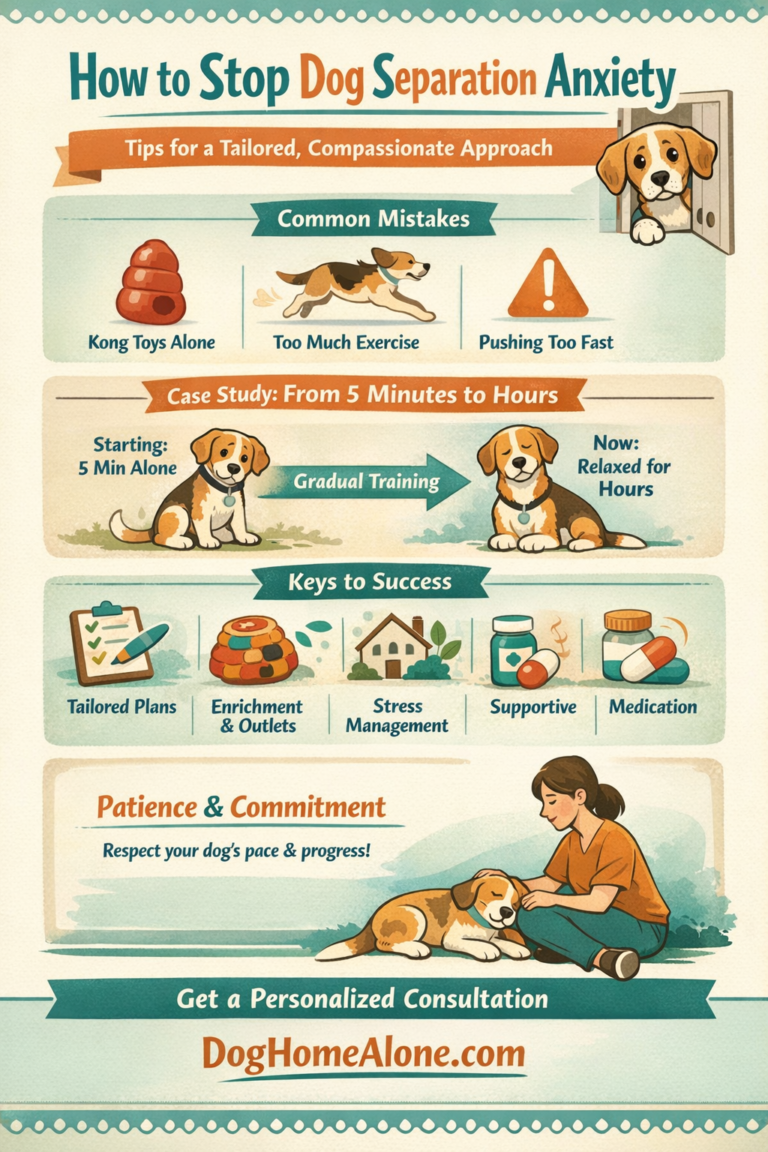
Relying solely on toys like Kongs to keep the dog occupied, without addressing emotional stress.
Assuming that a tired dog is a calm dog; over-exercising can actually increase anxiety rather than reduce it.
Ignoring signs of escalating distress and pushing the dog beyond their current tolerance.
Recognizing these mistakes early can prevent months of unnecessary stress for both the dog and their family.
Case Study: From 5 Minutes to Hours
One of my recent clients had a dog who could barely stay alone for five minutes without panicking. By tailoring the training to the dog’s personality, age, breed, and previous experiences, we slowly increased tolerance while providing appropriate outlets and enrichment.
Over time, and with consistent application of a multimodal approach—including management of daily stressors and occasional supportive medication under veterinary guidance—the dog could comfortably remain alone for several hours. This progress demonstrates that careful, individualized planning is far more effective than generic advice or quick fixes.
Setting Realistic Goals for Alone Time
The ideal outcome varies depending on the guardian’s lifestyle and needs. Some only need their dog to tolerate two hours alone, for example when running errands, while others may require a full workday. After working with dogs with separation anxiety, many guardians choose to limit alone time even after training because they understand their dog’s emotional needs better.
The key is to set achievable milestones and respect the dog’s current coping abilities, gradually expanding their comfort zone without causing trauma or setbacks.
A Multimodal Approach to Reducing Separation Anxiety
My approach combines several elements to help dogs feel secure and confident:
Individualized plans: Every dog’s history, personality, and breed traits are considered.
Enrichment and mental outlets: Activities are carefully chosen to reduce stress and satisfy the dog’s needs.
Daily stress management: We address triggers in the home environment and family routines that may exacerbate anxiety.
Supportive medication when necessary: In collaboration with a veterinary behaviorist, medication can accelerate progress and reduce distress in severe cases.
This comprehensive strategy ensures that training is ethical, sustainable, and tailored to each unique dog-guardian team.
Final Thoughts: Patience and Commitment
Stopping separation anxiety is rarely instant. It requires a guardian who is patient, empathetic, and willing to commit to gradual, measurable progress. By understanding your dog’s real thresholds and providing consistent support, you can help your dog feel safe, calm, and secure when alone.
Take the First Step Today
If you’ve been struggling for months with your dog’s separation anxiety, you don’t have to do it alone. Book a personalized consultation today and receive a tailored plan that respects your dog’s personality, your lifestyle, and the realities of everyday life.
Book Your Consultation